From Equations to Genomes: My Journey to Harvard Medical School and the Khorana Scholars Program 2024
Published:
A blog on my beautiful experience at Harvard, Boston, USA as a part of my summer program in 2024.
This is perhaps the longest article in the whole of medium and I dedicate this to all the people I have mentioned here, and to all those who possess a deeply hidden and inarticulate desire for something beyond the daily life.
To begin with, I will provide a very brief overview of the last few years of my life, focusing primarily on my academic journey, and sharing bits and pieces of information so that we at least have a foundation to build on without having to lose the flow and connections in the detailing.

Harvard Medical School
Introduction
I am Gauranga Kumar Baishya, currently pursuing my Master’s in Data Science at Chennai Mathematical Institute (CMI). Before this, I was part of the graduate program in Mathematics at the Indian Institute of Technology Kharagpur. My time at Kharagpur was not particularly enjoyable; the teaching methods and code of conduct felt extraneous, tiresome, and overly mechanical. This is, of course, my perspective, and others may have different experiences. However, I did meet two of my favorite people out there: Anshika and Joydeep. Consequently, I left the program midway to join the Data Science program at CMI, where I truly thrive, thanks to the supportive teaching and learning culture. Naturally, there are exceptions, and not every instructor is perfect, but overall, I find it a much better fit.

With Anshika, IIT Kharagpur
CMI
Life there at CMI is quite enjoyable. We only have 2 or 3 classes in the morning, most of which wrap up by midday, leaving ample time for self-study — something I truly cherish. I’ve always preferred diving into a couple of relevant books over relying solely on class notes. This approach might be why my CGPA isn’t stellar, but it’s not for lack of caring about grades. I believe you gain a deeper understanding and broader knowledge from textbooks compared to just following the instructor’s notes. You get a thorough historical introduction to the topic, including why it developed the way it did. You learn about the setbacks in previous theories, what was needed to overcome those problems, and how people achieved those advancements. You discover what we have now as a result, its current utility, the challenges we face, potential solutions, and the most recent progress in the field. It’s storytelling and that makes it enjoyable and I feel this is worth risking a few grade points! Ofcourse, the best is to manage time and energy to be able to do both! Of course, there is the everyday, day-to-day learning that you get, much like you would from a YouTube video or a Medium article. However, you miss out on the deeper understanding and the joy of discovering the answers to some of the beautiful “whys” that these books offer.


Chennai Mathematical Institute (CMI)
Another aspect I appreciate here is the assignments — most of them, at least. These assignments are unique in that it’s difficult to find solutions online. To tackle them, you need to thoroughly understand the theory. Often, they test a specific theoretical concept or require you to apply that concept to solve an interesting problem. I am not sure if people like it (coz, I know a couple of us simply copy it verbatim from some others; not that I don’t 😂) but I enjoy it. Occasionally, we have group assignments, which adds to the experience. I prefer assignments that strike a balance; they shouldn’t be too difficult to the point of being unsolvable within a reasonable timeframe, nor too easy (for example: simply involving the direct application of a theorem). They should be challenging yet engaging, avoiding, for instance, dully using a bunch of theorems merely to solve an unuseful, complicated problem.
There are a few things I find very difficult. First, the dust and heat — Chennai is incredibly, unbearably hot and humid. Second, the auto-rickshaw drivers — they can be quite difficult to deal with, and I haven’t encountered a single one who was pleasant to talk to. Thankfully, the rest of the people and the classmates: they are amazing! The food at CMI is decent, but it could be better. Additionally, the tuition fees are quite high unless you can provide proof of financial need.
Mathematics
I have a strong background in Pure Mathematics, yes that’s right! oh, I love mathematics! Let me share a bit of that. It deserves it.
Early on, I was very good at it, probably because I loved it more than any other subject. My father too had me inspired by how beautiful and useful mathematics is. He would buy me lots of math books:- lots of them and silently keep them on the shelves. I would read them one after the other and amuse myself! I remember, once when he shared this quote when I was in kindergarten.
“Mathematics is the language in which God has written the universe.”
― Galileo Galilei

0.999… = 1 !
Although I have always loved mathematics, I have struggled with arithmetic, especially mental arithmetic, and still do. I can multiply two three-digit numbers in about two minutes or add large numbers together, but I shy away from subtracting or dividing even two-digit numbers. However, I have always been fascinated by big numbers. I remember adding extra digits to my daily math workbook summations or multiplications just to see how large the results could get. I quickly realized that adding just one extra digit to two large numbers being multiplied made the result grow exponentially. Soon, my notebook was filled with numbers everywhere. My father, who assigned me the homework, would graciously check the answers based on these extended problems instead of the original ones. It was quite amusing.
If I were to study mathematics all over again, I would probably study Analytic Number Theory and make a career in this field.
“Mathematics is the queen of the sciences, and number theory is the queen of mathematics.”
― Carl Friedrich Gauss
Analytic number theory is a branch of number theory that uses methods from mathematical analysis to solve problems about integers and prime numbers. How many of you have heard of the Prime Number Theorem or the Riemann Hypothesis?
It’s quite common in mathematics for an average human being to encounter a very challenging problem and dedicate an entire career to solving it. Some of such problems are featured in Math Olympiads. My passion for mathematics was rekindled when in the 6th grade, I participated in one of these competitions without any preparation and won the 2nd prize in the state! Since then, I have actively participated in Math Olympiads and earned numerous accolades. During my childhood, I struggled to make friends, engage in conversations, or enjoy social activities (which is not the case now :)). Solving these mathematical problems provided me with immense satisfaction and a sense of purpose at that time. Much of my childhood was spent watching cartoons, reading books, sketching, listening to songs, playing games, and, significantly to learning a higher math topic or solving Olympiad problems. I managed to learn algebra, trigonometry, calculus, and Combinatorics by the 4th standard. I loved learning but ofcourse there were a lot of gaps in my understanding which remained unclear until I reached college.
Like most people of my age, many events unfolded during college, leading to a challenging emotional period that caused me to lose touch with mathematics for a few years. Despite this, I decided to do a Bachelor’s degree in Mathematics. I am glad I took that decision; over three-quarters of my recent career relies on concepts I learned either during my bachelor’s degree or skills I honed through solving Math Olympiad problems.
Biology
I am pretty sure you are a bit amazed to see this word in the middle of this story! Or maybe to realize the title of this article after reading the Mathematics section. Hold on, I will get there. But before that let me give you a brief introduction to how I have looked at biology throughout my career.
To begin with, I have a terrible memory and very poor retention. I have always struggled with subjects like Social Science and Hindi. Surprisingly, I didn’t have much difficulty with Assamese or English — some peculiar quirk of my brain that I never quite understood! That said, I excelled in Physics and Chemistry but just tried not to perform poorly in Biology and economics. These subjects, which required a lot of memorization, were made easier for me by its grace.
When I was in the 10th standard or below, I thoroughly enjoyed biology, even though I knew I might leave it behind after college. I remember attending coaching classes (Career Point) in the 6th standard, not to prepare for IIT-JEE, but simply to learn cool and advanced topics. As I always say and will say again — I love learning! The world is too beautiful and filled with countless wonderful things to explore. It’s a shame to squander time on trivial matters when there is so much to learn and discover. To learn and discover could be anything; for instance, learning the meaning of this weird painting by a genius!

Guernica, Picasso (1937)
The teacher who taught us biology at Career Point soon became one of my favorite teachers. His name is Dr. Biman Sarma. The way he taught, smoothly connecting it to events we see in our day-to-day life like gravity, but do not pay much attention to, accompanied by a good sense of humor, and a few happy, sad, and inspirational stories from his personal life made his classes engaging and memorable. The last time I met him was years ago; I hope to meet him again one day.
I believe that teachers play a crucial role in shaping both our academic and non-academic lives. Like with mathematics, I started looking at problems from the Biology Olympiad — Particularly the questions from INJSO (Indian National Junior Science Olympiad) — Oh it had beautiful conceptual questions and case studies. Mind you, I never qualified for INJSO but I continued to look at the papers and solve them either using books, the internet, or with his help.
My father often bought me dictionaries, and encyclopedias and I also remember spending a considerable amount of time reading those. All of them a huge content on life and evolution.
Up until the 10th standard, I excelled in my exams and won the admiration of my teachers. However, things changed dramatically after the 10th. I will skip the personal details, but in summary, I took a biology course, performed poorly, and failed a few exams because I didn’t study. My teachers eventually called my father to inform him that I was unenrolled from the course. Given the person I had become at that time, anyone might have done the same. I was indifferent and didn’t think much about it. I left biology behind and didn’t revisit it again; but only until recently.
Mathematics and Biology
Having provided a brief introduction to my background, particularly in Mathematics and Biology separately, I now have the tools to address the following question: “How have these personal experiences and inspirations influenced my forthcoming decisions and what have I gained?” To answer this question, let me begin with something unusual.
I had a friend, and he still is ofcourse, a very good friend. His name is Maharshi Sarma. He is in Paris and he studies the cosmos. Another good friend of mine, Kaustav Kashyap Das is doing his PhD in astrophysics at the California Institute of Technology (Caltech). Yet another one, Joydeep Sarkar is going to do a PhD in String Theory at CMI. Anjan Jyoti Deka, my senior friend is there too. Strangely, I have, over the years, although have been aloof in social interactions have made quite a few friends and 4 of them are into Physics —all somehow ending up studying the universe either in its entirety or through the investigation of its fundamental components that underpin this science. I find this particularly interesting — given that I wanted to study Physics as well but somehow was drawn away by mathematics.

Joydeep with a copy of the “bible of Gravitation” I gifted him on his birthday
I believe there are three major frontiers — corners, an edge in science, among possibly others. These frontiers mark the boundaries where common sense gives way to the extraordinary, bordering on the magical — still science, yet (/almost?) supernatural, approaching the close quarters of the divine. These frontiers are the cosmos, artificial intelligence, and life itself. In the realm of the cosmos, we grapple with questions such as: What lies beyond the universe? What existed before the Big Bang? How enigmatic are black holes? How valid is Quantum Mechanics? What about String Theory? Is there a God? Who is God? How did it come to be? …In the realm of life and AI (both separately and together), we ponder: What is consciousness? Does the human brain possess free will? How did life (especially, us, humans) come to exist in such an unbelievably wondrous form? Are we living in a simulation? Can we develop AI that achieves consciousness and free will? Or to put in one simple question: Is it possible to replicate nature, particularly the human brain, in its entirety or beyond? The brain’s remarkable (magical/divine) complexity and functionality stem from an evolutionary process that has spanned an astoundingly long 3,500,000,000 billion years. Why wouldn’t it be magical? It is a product of these many years of evolution. Just so you know, I’m emphasizing this more than usual: how long do you think is a year? Sometimes it feels interminably long, doesn’t it? Now, consider the magnitude of 3,500,000,000 billion years. Take a moment, breathe and imagine … just how immense this span of time truly is.
If you want to learn more about the wonders of us, in particular, our brains, I highly recommend reading David Eagleman’s books — they are sure to blow your mind. Also, take a moment: how many of you remember Brain Games on Nat Geo?
While this frontier lies within us, exploring our depths and of our existence and trying to mimic it in technology, the other stretches beyond, seeking to understand the vast expanse of the universe.

These philosophical yet scientific musings have captivated me during my solitary moments and continue to do so. This is why I am studying Artificial Intelligence, with the aim of 1) using it to explore life (our inner selves, for instance, the human brain) and 2) replicating this intelligence in technology. While I leave it to my friends to tackle the grand questions of the cosmos, I am determined to seek answers about life itself. This endeavor will undoubtedly take years, perhaps a lifetime, and I may never fully comprehend it — but this pursuit gives my life meaning. My purpose is driven by my desire to answer these profound questions, my mathematical skills, passion, and all the qualities that make me unique. This quest is my gift and my calling.
“The meaning of life is to find your gift. The purpose of life is to give it away.”
― Pablo Picasso
This was the initial inspiration that led me to pursue a career in Computational Biology. It is the only field that allows me to work on projects that integrate Biology with concepts from Mathematics, Statistics, and Computer Science — possibly, the three foundational pillars of Artificial Intelligence.
2nd Inspiration
Do you love chocolates? If you do, on a scale from 1 to 10, how much do you love sweet chocolate? This paragraph is dedicated to all those who rate it a perfect 10.
Imagine being stripped of chocolates, sweets, and delicious food for your entire life! Imagine being deprived of delicious sweet fruits, dishes, or drinks forever. Picture having to pierce your stomach twice a day with insulin injections just to survive. Imagine going blind or having your kidneys damaged. Envision falling and injuring your knee, knowing you must take extra care because the wound will take months to heal, and there’s a risk of infection that could lead to amputation or possibly, death if it spreads. These fears and limitations are part of my daily life. It affected me mentally for a couple of years, but now, I have learned to live with it.
I have type-1 diabetes. Living with diabetes means constant vigilance and numerous lifestyle changes. I have to meticulously monitor my blood sugar levels several times a day. Each meal requires careful planning to balance carbohydrates, proteins, and fats. Exercise is no longer just a choice but a necessity to help control my blood glucose levels. Carrying supplies like a glucose meter, insulin, and emergency snacks is part of my routine, whether I’m going to work or just taking a walk. Social gatherings and dining out pose their own set of challenges. I often have to ask about ingredients and preparation methods, and sometimes I bring my food to ensure it’s safe for me to eat. The spontaneous enjoyment of food is a luxury I no longer have; every bite must be calculated. There are also the constant medical check-ups to manage and monitor potential complications. Eyes, kidneys, heart — every part of the body needs regular scrutiny because diabetes increases the risk of various diseases (I was very recently diagnosed with Non-Proliferate Diabetic Retinopathy). The mental burden is substantial, knowing that any slip-up in care could have serious consequences. Finding a potential partner comes with its own set of considerations due to the genetic component of diabetes. I have to think about how my condition could affect future children and whether my partner is prepared to handle the complexities of living with someone who has diabetes. This adds another layer of difficulty in building relationships, as not everyone is ready to face these challenges together.
Yet, despite these challenges, I’ve found strength and resilience. Diabetes has taught me discipline and given me a profound appreciation for health. Driving me to understand more about the disease and contribute to finding better treatments and possibly a cure. My journey with diabetes is a continuous reminder of why I am dedicated to this field and why I strive to make a little difference through my work.
3rd Inspiration
Harvard. Who wouldn’t want the opportunity to be a part of Harvard?
Institute of Mathematical Sciences (IMSc.)
Now, I know what I want to do but how do I get started?
Inspired by these interests, I began searching for institutes in India to undertake a short-term project in Computational Biology. There were two main reasons for this. Firstly, I had no prior experience in the field. Secondly, the upcoming year is the only time I am eligible to apply for the Khorana Scholar’s Program, and I need substantial research experience in Computational Biology to effectively fill out the “Past Research Experience” section of the application. I’m sure the winners reading this article may feel differently, but in reality, it is highly competitive, and based on past winners, they were truly extraordinary!
Specifically, I sought out researchers who use Machine Learning to advance Biological Research. I have a particular fondness for smaller research institutes, as opposed to large technical institutes like the IITs. I received multiple opportunities from various institutes and ultimately decided to work with a faculty member in the Department of Computational Biology at the Institute of Mathematical Sciences (IMSc) from May 2023 to October 2023. This department is relatively new compared to others, and I was particularly drawn to the work being done by my supervisor.
He works on single-cell analysis, which is a very new and groundbreaking approach in biological research. This technique examines the genomic, transcriptomic, and proteomic profiles of individual cells, allowing scientists to uncover the unique characteristics and roles of different cell types within a tissue. Unlike traditional methods that analyze large groups of cells (bulk) and provide averaged results, single-cell analysis reveals the true diversity and complexity of cellular responses. This leads to more accurate insights into how cells develop, how diseases progress, and how we might find new treatments. It’s a scientific breakthrough.
Q: What is your long-term vision for single-cell genomics?
Cole Trapnell, PhD: I would like to see all the things we can imagine measuring in single cells democratized and deployed throughout the worlds of biology and medicine. I think that you can extract insights that are really hard to come by with other techniques. I’m really mystified by the fact that our DNA encodes what is basically the most complex and beautiful program that we’ve ever encountered as a species, and I want to know how it can generate so many different cell types that do so many different things from a single, static program. Even if we can understand a small piece of it, like how the genome encodes the precise pattern of spatial organization of cells in an organ, that is a triumph.
During my six-month-long internship there joint with my friend, Mehak Singhal, we conducted research on multimodal single-cell data, focusing on a subset of a 300,000-cell time course dataset. This data included gene expression and surface protein measurements obtained through CITE-Seq technology from mobilized peripheral CD34+ hematopoietic stem and progenitor cells collected from four healthy human donors (Kaggle). Although my knowledge of the biological aspects was limited, I referred to “Molecular Biology of the Cell” by Bruce Alberts to gain a foundational understanding. My project involved exploring and learning about various machine-learning models and techniques that revealed significant patterns and relationships within the data. I experimented with and implemented mathematical modeling and optimization techniques to model how protein levels varied with gene expression values. To gain a deeper insight into the data, I employed Markov Chain Monte Carlo techniques. The breakthrough in my research came with the application of Gaussian Processes, which effectively captured the fluctuations in cell-averaged mRNA and protein values. It was my very first introduction to Gaussian Processes and I found it quite hard to follow. The book that I followed was Gaussian Processes for Machine Learning by Rasmussen and numerous other medium articles. I also investigated marker genes—genes highly correlated with protein profiles across different cell types. For example, one of the genes, CD74, known for its role in antigen presentation. I have tried to keep the above description simple for everyone to follow. But if you are interested to know more about it, you can go through the Python notebooks here. Please note that the notebooks are not in any particular order.
In the meantime, I also applied and consequently got shortlisted with a scholarship for the CCAIM AI and Machine Learning Summer School 2023 in Healthcare, University of Cambridge where I got an opportunity to present this work in front of esteemed researchers in this field. Gladly, I got a lot of positive feedback!
However, my time there at IMSc wasn’t as pleasant as I had anticipated, but I learned a lot. Soon after, I applied to the Khorana Scholarship program in October or November of 2023, though I can’t recall the exact month. I was led to make a significant mistake with my application, but I’ll skip the reasons why I thought so. So I gave up on Khorana completely. As winter approached, I eagerly anticipated the upcoming winter break, to do something; something interesting.
“Winter is coming.”
― George R.R. Martin, A Game of Thrones
The Winter Break
I love winters, probably because I’ve experienced far more summers and unbearable heat in these cities, with only a few weeks of winter. That’s not to say there haven’t been some brutally cold days. For most of my winter breaks since college, I’ve preferred to stay at home rather than pursue a winter internship or go on vacation. Vacation was never an option for my family. During these breaks, I usually engage in some math, catch up on sleep, teach math to children, binge-watch movies and TV series, or read some fascinating non-fiction books/articles/magazines. The winter of 2023 was a little different. Due to the major unintended drawback in my application, which I haven’t detailed here, I began researching the work of various researchers in labs I was interested in, mostly in the US to mail them. Every day, I looked up numerous profiles and ended up emailing one or two researchers about the possibility of a funded visiting research position in their lab.
Let me share a few thoughts here. I often encounter people who send out mass emails — 100 to 200 in just a few days — requesting research positions with a generic message. Some even use AI tools like ChatGPT to craft these emails and send them without much editing. I wouldn’t encourage this approach. Instead, take the time to find labs that truly interest you. Investigate their research interests, read a few of their publications, and see if their work aligns with your interests and expertise. Although this process is time-consuming, it is important to write a concise and personalized email. Mention how you discovered their lab, why you are interested in working there, and cite a few papers and their work you’ve read in the process. Connect your past research experience, if any, to their work. Remember to keep your message brief and to the point. For more information on how to write an email, check this out.
Okay, coming back, I emailed around 50 people and received many positive responses. Cutting the rest of the short, I had a meeting scheduled with Prof. Yu-Hua Tseng on February 12, 2024. While preparing for the meeting, I ensured I had a thorough understanding of her lab and its recent publications, particularly those aligned with my research interests. The meeting went exceptionally well, and soon after, I confirmed my position at the Tseng Lab at the Joslin Diabetes Center, an affiliate of Harvard Medical School. I would be working on one of the computational components of a very major project in this wet lab.
Here is an excerpt from the Tseng Lab homepage:
Our laboratory is part of the Section on Integrative Physiology and Metabolism at the Joslin Diabetes Center. We focus on the mechanisms underlying the regulation of the energy balance to develop potential therapies for combating obesity and related diseases.

Above, human brown fat progenitor cells express the calorie-burning, UCP1 proteins (green) as the cell differentiates. (Tseng Laboratory, Joslin Diabetes Center)
“One reason why some people tend to gain weight more than others is because their bodies aren’t as efficient at converting sugars and fat into energy. The discovery of a set of genes controlling this process could lead to new treatments for obesity and diabetes. We all have ‘good’ brown fat cells that produce a calorie-burning type of protein called UCP1 — seen as the green-stained dots in this picture of a progenitor brown fat cell. Researchers identified genes that can boost or slow down UCP1 production, a bit like a dimmer switch on a light. In future, controlling these genes may allow doctors to increase the activity of brown fat cells, so that they remove sugars from the blood more rapidly or burn more energy stored by ‘bad’ fat cells, making them shrink.” -Mick Warwicker, communications consultant, science broadcast journalist, and writer.
[
Tseng Lab- Growing ‘good,’ brown fat from human cells
](https://videopress.com/v/OVENONQI?source=post_page—–5c77d6caded4—————————————)
Isn’t it interesting?!
But there was a big problem!
As I learned from her, most of the funding is designated for undergraduate students, and not for graduate students. Additionally, Harvard requires proof of financial support amounting to approximately $3000+ per month (Which is huge!), either from personal funds or through a scholarship, to be eligible for my J1 visa sponsored by Harvard. This is equivalent to INR 7.5 lakhs and I cannot imagine spending this amount. I am already on an education loan at CMI and a few other (personal) loans. However, I told Prof. Tseng that I did not want to give up yet and would try to manage my funding somehow.
Because my work was computational, she suggested that I work virtually from India. While I had the option to fund my stay at Joslin personally, she kindly insisted that I work remotely from India. She was too understanding. However, I was yearning to visit and work at the Tseng lab in person. For high achievers, the thought of someone like me dreaming of such an opportunity might seem esoteric and amusing. Yet, I must emphasize that I am an average student striving against life’s formidable challenges to pursue “my big dreams” one after the other. Moreover, working virtually from home is simply not feasible for me. I would lack any motivation. The routine of waking up, spending hours in front of a screen, attending occasional meetings, eating meals prepared by my mother, returning to the screen, and then going to sleep would quickly become unbearably monotonous. Within a mere two days, I would likely succumb to this tedium and quit.
However, my father had a bold strategy in mind.
I dedicate half of my life’s accomplishments to my father, even though he would not desire such recognition. It is what it is: the nature of my gratitude and love for him; is infinite. He said,
“I will arrange the finance for you, don’t worry about it.”
What do you mean, “I will arrange it”?! Even if he did, I knew exactly what I would do: go to Boston, survive, and come back. As I write this post, I have two weeks left of my stay, and I’ve only spent $1600. By the end of my three-month tenure, I will likely have spent around $2000, which is a manageable amount. This includes a somewhat lavish lifestyle with occasional food orders and shopping. Of course, I could have saved more had I focused purely on survival. But how did I know this was possible? Thanks to my friend Kaustav at Caltech, who informed me. Over 90% of the total expenses are consumed by rent. Boston, if not the most expensive city, is certainly one of the priciest. Fortunately, I found a cheap, spacious private room for $600, including utilities, in Roxbury. This is equivalent to $520 plus utilities for a large private room in Boston, which is quite rare. The key is to look for accommodation towards the end of summer when many students leave the state for internships. At this time, they are more willing to accept tenants who can pay a reasonable amount to sublease their rooms for the duration of their absence. Taking this risk may not be worthwhile, but my life is already full of taking risks, so I don’t worry too much about it. Miraculously, everything has always managed to work out in the end. While Roxbury is less expensive than areas like Brookline, contrary to popular belief, I find it vibrant and lively. It may not be the safest neighborhood, but I believe there’s little to worry about if you know how to take care of yourself.
Alright, back to the main point. After all the discussions, deliberations, and internal debates, this is what I realized: “None of this is worth it, just give up.” It took me a tenth of the time to reject the entire idea than it did to decide on funding my visit with personal finances! I gave up on something for the first time in a very long while. I quickly emailed Prof. Tseng, expressing my regret that I couldn’t secure my funding and stating that I would attempt to manage the internship remotely. Although I did not wish to continue this way at all, everything was settled for now.
05–03–2024 (DD-MM-YYYY)
I have never really celebrated my birthdays. Even at IIT KGP, there was one occasion when Anshika bought a cake for me and we celebrated together, just the two of us.

Anshika, 05/03/2023 (This is the only picture I have to support my claim, unfortunately)
Occasionally, my mother would take the initiative to invite a few people — neighbors, relatives, and friends — for a birthday gathering, without my prior knowledge. However, each year, she faithfully visits the “Ganesh” temple, a little distance from our home, to light N oil lamps and N incense sticks, where N = my new age. She is a deeply religious woman, and despite many arguments against the existence of different religions, she stands as proof that there is at least one person who finds true happiness in their practice. I never celebrated my birthdays during college and school. My birthday, on the 5th of March, always coincided with my final term examinations, leaving no time for celebration. As a result, my birthdays were always either uneventful or somewhat gloomy. After all the conflicts with friends and family, the separations from relatives and neighbors, and the many disagreements in any human relationships, birthday is a day when one is forgiven and one is celebrated — a moment to honor one’s existence and presence in their life. Yet, I miss this special day, the day set aside for people to forgive me for all that I am, the day I long for but never truly see. Why wouldn’t I feel gloomy?
But March 5, 2024, was different. Very different.
I received an email from IUSSTF informing me that I had been shortlisted for the prestigious Khorana Scholars Program 2024; Amidst the cacophony of everyday life, I had forgotten that I had applied for it. Soon, I received the offer letters.


Certainly, if miracles be the command over nature, they appear most in adversity.
— FRANCIS BACON
It was indeed the best birthday gift ever. I wouldn’t have made it here if it weren’t for Prof. Anupam Saikia, who wrote me a Letter of Recommendation. Thank you! Regardless of my Khorana results, let’s set that aside for a moment. He is the most wonderful person and teacher I have ever had the fortune of learning from and being mentored by. That’s all I need to say. Let me share a fun fact about him: His PhD advisor at Cambridge University was Prof. John Coates the same person who advised Prof. Andrew Wiles. Prof. Andrew Wiles is arguably the most renowned living mathematician, known for solving one of the most famous unsolved problems in mathematics, The Fermat’s Last Theorem.

From left tonight: me, Pranmoyee (Prof. Saikia’s daughter), Prof. Anupam Saikia, my best friend Dheeraj at a Mathematics Fest in 2023, Golaghat, Assam
Visa
I will keep this brief. The process was surprisingly smooth for me. After receiving my DS2019 form from the Harvard International Office, it took less than two weeks to get my visa stamped in my passport, including the interview. During the interview, they asked about my future plans, where I would be staying, and what I would be working on. After a few minutes of conversation, my visa was immediately approved. Just follow the rules and complete all necessary steps; I am confident it will work out in the end.
However, I know a few people who encountered significant difficulties, either in obtaining the DS2019 or at various stages of the visa process. Many of these issues are beyond one’s control, and overcoming them often requires a bit of luck. Keep the faith, and I wish you the best of luck!
12th of March 2024. It had only been a week and a half since I came home after I had appeared for my end-term examinations at CMI. It was good, but again, I didn’t perform as well as I expected to.
The project
I officially began my internship from home on March 4, 2024. I intentionally stayed home for a few days before traveling, so I could savor my mom’s delicious cooking, spend time with Eli (my pet dog), and catch up with the few close friends I have in Guwahati, Assam, India. One of my favorite activities is meeting up with friends during vacations, getting updates on their lives, talking, and indulging in delicious food. Food, after all, gives life to the conversations! Sharing your pain and struggles, and being completely yourself, makes you feel at home. You also receive free opinions and advice on tough situations you’re facing, because these are things you can’t easily share with others and therefore wouldn’t get advice on otherwise.
At the same time, I was also working on my project. Dr. Henrique Camara is my guide. I will more about him later. To prepare, I managed to read several papers he sent me, which provided a foundational understanding of the role of brown adipose tissue, its significance, and the current research landscape. It’s crucial to have some knowledge of the domain you’re going to work in. This can sometimes be challenging, especially if it’s entirely outside your field of expertise. However, based on my experience, it should be fairly manageable if you have the interest, internet, and time. I believe these 3 are all that you require. I recommend using tools like ChatGPT to assist with your learning but be sure to validate the information provided. While it seldom makes errors with factual data, it can often falter in logical reasoning and quantitative results. I have been a quick learner myself, so it was easy for me to grasp it. We soon decided on the project I would be working on, and I realized, “Oh God! Thank you. I’m going to have an interesting summer after all.” I recall Dr. Camara writing to me, stating that the topic was indeed very interesting but quite challenging, and it indeed turned out to be both!

Mixed Fruit Juice Deconvolution
I was meant to work on deconvolution analysis. Deconvolution is a computational technique used to resolve complex mixtures of signals into their individual components. To illustrate, imagine you have a glass of mixed fruit juice. Each fruit contributes unique flavors and nutrients, but they are all blended together. Deconvolution, in this context, would involve using the intrinsic properties of the mixed juice to determine the abundance of each type of fruit within it. It is an amazing process that uses intricate AI/ML algorithms, probabilistic models, and statistical methods to deconvolve bulk RNA-seq data generated by my lab. This project was particularly exciting because it was the first time (to the best of my knowledge) that anyone would be applying these deconvolution tools to human neck adipose tissue data, using a reference single-nuclei RNA-seq data that Dr. Camara prepared. The goal was to identify and quantify the abundance of various cell types present in the bulk samples as accurately as possible.

Deconvolution of bulk RNA seq data using a sn RNA seq data (in a more technical way)
One of the challenges one is expected to face is that different deconvolution models often produce varying results from the same data. To address this, one would have to delve deeply into the mathematics behind each model and tackle the problem of AI explainability. You see, this is when pure mathematics comes into the picture to save you! How will you exactly explain the situation if you do not have a very proper understanding of the Mathematics, or Mathematics in general? It was crucial to understand why these models behaved differently and how to interpret their outputs reliably. Moreover, most of the deconvolution tools available in the market are not as proficient as one might expect. They often require further refinements, additional parameters, or advanced statistical and ML techniques to enhance their performance.
But why is it important? Deconvolution is crucial because single-cell RNA sequencing (scRNA-seq) data, while highly detailed, is extremely expensive, time-consuming, and labor-intensive to produce. Isolating and sequencing individual cells requires meticulous effort and substantial resources, making it impractical for large-scale studies. By applying deconvolution techniques to bulk RNA-seq data, we can infer the cellular composition of complex tissues without the need for extensive single-cell experiments. Bulk RNA-seq data is more accessible and cheaper to generate, but it lacks the resolution. Deconvolution fills this gap by using computational models to break down bulk data into its cellular components, based on reference profiles from scRNA-seq. This enables a broader, more cost-effective exploration of cellular heterogeneity in tissues.
Longwood
The day I arrived in Boston felt incredibly different from what I was used to in Chennai (Ofcourse!). Coming from Chennai’s unbearably hot and humid climate, where stepping outside the AC meant being drenched in sweat within 2 minutes, the cool, air of Boston was a welcome change. At 18 degrees Celsius with no humidity, and the chilling wind, it already felt like paradise (Although, after a few days, I found it too dry, but a moisturizing lotion took care of that).
I settled into my room, which, although a bit distant from the Harvard Medical School area, was spacious, comfortable, and affordably priced at $550. Located in Roxbury, this neighborhood of Boston often carries a reputation that I found to be quite misleading. Contrary to popular opinion, I discovered Roxbury to be a nice place to stay. The area is predominantly inhabited by Mexicans, who are often seen drinking and smoking, which might contribute to its perceived roughness. However, in my three months of living here, I found the residents to be friendly and welcoming. I even made a few Mexican friends and spent enjoyable evenings sometimes chatting and having fun. It was a bit difficult to communicate because they could only speak Spanish but I was aided by the little Spanish I learned out of curiosity years ago. They would occasionally offer me dinner, cigarettes, and drinks (which I politely declined, but not the dinner haha). Despite Roxbury’s higher crime rate compared to other parts of Boston, I found it to be a good place overall, and I felt comfortable during my stay. Unlike other neighborhoods, where people tend to keep to themselves and community life is minimal, Roxbury had a genuine sense of community. People were friendly and welcoming, rather than offering “a superficial “I am sorry, I wish I could help” as they hurried past”.

Near my place of Accommodation at Roxbury
The next day, I arrived at what I initially misheard as the “Longwood Magical Area.” The name sounded so enchanting that my mind transformed “Longwood Medical Area” into something far more whimsical. The place turned out to be quite remarkable. The area was teeming with medical institutions, most of which were affiliated with Harvard. It was an impressive and beautiful hub of hospitals, healthcare, and research. It seemed as if every corner I turned, there was another hospital, research facility, or medical school, all bustling with activity and purpose. The architecture was a blend of modernity and tradition, with state-of-the-art facilities standing alongside these historic buildings.


At the Longwood Medical Area
In the heart of the Longwood Medical Area stood the Harvard Medical School with its white, majestic architecture commanding attention. Surrounding it were renowned institutions such as the Dana Farber Cancer Institute, Brigham and Women’s Hospital, Beth Israel Deaconess Medical Center, Boston Children’s Hospital, the Blavatnik Institute, and many others. The streets were bustling with healthcare professionals, easily identifiable by their blue uniforms and ID cards that proudly declared their roles as doctors or medical practitioners.


Left: Joslin Diabetes Center, Right: BIDMC
Right next to one of Dana Farber’s buildings was the Joslin Diabetes Center, a modest structure where I would spend the remainder of my time in Boston. Upon entering Joslin, I sent a text to Henrique, who promptly came downstairs to greet me. He warmly welcomed me and gave me a tour of the center, introducing me to the other lab members. During the tour, I learned that the entire Joslin building was set to be demolished and relocated, with a new Dana Farber Cancer Institute building slated to take its place. I met Lucas and Joao from Brazil, Fabiola from Spain and Cigdem from Turkey; they were very nice! The next few days were a bit hectic. I needed to get my ID, set up my desktop with my login credentials, and complete several paperwork requirements, including providing my Social Security number for payroll purposes. I quickly went to a Social Security office to get my SSN issued, opened a new Chase checking account, and then finally started my work.
On a slightly different topic, here is an interesting perk about opening a Chase account (T&C apply): if you get a referral from an existing user, you receive $300 absolutely for free, along with a personal referral code. When you share this code with others and they open an account using it, you earn $50 for each person who does so. Isn’t that great? The only requirement is to have a direct deposit from a U.S.-based organization or institution, which is quite easy to arrange. I managed to earn $800 for free! Not only do you help others get some extra cash, but you also benefit in return for assisting them.
Work
I won’t go into much detail about my work, but it turned out to be just as fascinating as I had hoped. Every day, I would meet my guide, Henrique, next to my office. We would discuss the biological aspects of our work, and he would patiently address my questions. I would then translate his insights into meaningful mathematical models. (However, Henrique had to leave for Brazil for 3 weeks in between to renew his visa and passport and to attend a conference. Although I couldn’t meet him in person during that time, we kept in touch virtually.) With my expertise and confidence, I solved many problems and made some remarkable discoveries within the dataset. I also utilized several intriguing tools.
Unlike many people, I have a particular fondness for presentations and excel at them. This may stem from my experiences attending presentations that were either too complex for the audience or incredibly boring. This motivated me to take up the challenge and demonstrate that presentations can be engaging and easy to understand. I love making them interesting and accessible.
Eager to present and share knowledge, I approached my Principal Investigator, Prof. Tseng, and requested to present a paper I had recently read at the journal club. Our lab meetings are held every Thursday from 9am to 11am, divided into two sections with two people presenting. One person shares their current or past work, and the other presents a paper, which we call the journal club presentation. There’s coffee and food too! I presented a benchmarking paper on deconvolution at the journal club. Not everyone appreciated it, as many found it difficult to understand, given their focus on wet lab work, while computational biology isn’t their forte. Much like how I feel about wet lab presentations — not my cup of tea. I’m grateful for Henrique, who made things easier for me throughout the summer. However, despite my efforts to simplify the content, it wasn’t easy enough for some. However, the good news was that Prof. Tseng appreciated my efforts and genuinely liked the presentation. Prof. Tseng’s friend, Efi G. Kokkotou, M.D., Ph.D., Sc.D. from BIDMC, later approached me with praise, saying it was one of the best presentations she had attended on the topic. This was one of the highest compliments I’ve ever received from someone so esteemed, and I will cherish it forever.
I had two more presentations at the end of the summer: one at another lab meeting and the other at the official Joslin Summer Students Presentations. The lab meeting presentation lasted an hour, and I delivered it successfully. The official presentation, however, was only seven minutes long. While it was well-received, I found it unsatisfactory. With so much data, theory, and stories to share, seven minutes felt insufficient. Nevertheless, the presentations were fun, especially the Q&A rounds. Questions ranged from simple clarifications to complex, long-standing problems in the field. Discussing these questions revealed new perspectives and directions. If I knew the answer, I shared it; if I was unsure, I admitted it, and we discussed it together. If no one knew the answer, it remained an open question. This collaborative and exploratory aspect of presentations is something I truly enjoy.

Joslin Summer student presentations
Boston
Let me share with you my experience in Boston.
Of many places I have visited abroad, I have a different outlook for Boston! Living in Boston offers an intricate tapestry of experiences shaped by its deep historical roots, diverse neighborhoods, and vibrant cultural scene. Boston, with its status as one of the most historically rich cities in the United States, provides a unique living experience. The cost of living in Boston is notably high, with expenses reported to be 50% higher than the national average according to Payscale. To live comfortably, it is often suggested that one needs to earn at least $79,000 after taxes, particularly if aiming to allocate funds towards both needs and savings/debt. However, it’s entirely feasible to manage on a tighter budget, as demonstrated by my own experience.

The orange line to Oak Grove
Transportation in Boston is highly efficient, with a robust public transit system comprising the subway (the “T”), buses, and the Commuter Rail. The T, which includes the Red, Orange, Blue, Green, and Silver lines, offers convenient travel throughout Boston and nearby cities like Cambridge, Brookline, and Somerville. A single subway ride costs $2.40, a bus ride $1.70, and a monthly pass $90. The Red Line connects key areas like Harvard, MIT, and South Station, while the Orange Line serves neighborhoods from Oak Grove to Forest Hills, including Massachusetts General Hospital and the North End.
The Blue Line links Wonderland in Revere to downtown, passing through Logan Airport, and the Green Line branches into four routes serving Boston College, Cleveland Circle, Riverside, and Heath Street. The Silver Line provides bus rapid transit to the Seaport District and Logan Airport. These lines offer extensive coverage and frequent service, making it easy for residents and visitors to navigate the city without needing a car or relying on services like Uber.
One of the interesting things about taking public transport is that you get to experience the US and its charm and eccentricities, all within a small, diverse sample. This reminds me of Prof. Karandikar’s statistics inference class on random sampling and its application in Exit polls.

The bus was extremely crowded, making it difficult to see the people sitting on the opposite side due to those standing in between. However, I had a small gap in my view, and what I saw was even more interesting: a man reading the Bhagavad Gita.


Boston Common and Public Garden
For an Indian accustomed to the sweltering heat of summer, Boston’s summer provides a refreshing and enjoyable change with its milder temperatures and vibrant activities. Unlike the relentless heat experienced in many parts of India, where temperatures can soar above 100°F (38°C), Boston’s summer weather is comparatively mild, with July being the warmest month, averaging highs of around 82°F (27.8°C) and lows of about 66°F (18.9°C). The city’s numerous parks, such as the Boston Common and the Public Garden, offer green spaces perfect for picnics, leisurely walks, and relaxation, while the Charles River Esplanade is ideal for boating, kayaking, or enjoying a scenic stroll.

Charles River, near MIT
For those who miss the monsoon season in India, Boston’s occasional summer thunderstorms provide a nostalgic reminder of home, offering a brief respite from the warmth with refreshing drizzle showers. The proximity to the ocean and nearby beaches, such as Revere Beach and Spectacle Island, offers excellent spots for swimming, sunbathing, and picnicking.


Revere beach
Evening temperatures in Boston cool down to make outdoor dining at rooftop restaurants or cafes enjoyable. For those preferring indoor activities during the hotter parts of the day, Boston’s air-conditioned museums and cultural institutions, like the Boston Public Library, Museum of Fine Arts, and the New England Aquarium, offer rich exhibits and attractions to explore in comfort. Oh, don’t miss the Whale watch! Moreover, Boston’s significant Indian population ensures access to familiar foods and cultural events.

Boston Public Library, after a drizzle
Boston is home to some of the world’s top colleges and universities: Harvard and MIT, making it a remarkable hub of innovation and education. As a result, Boston has become a center for technology-related industrial companies and biotech firms, driving advancements in fields such as pharmaceuticals, medical devices, and information technology. So, it offers ample opportunities for collaboration and career growth in cutting-edge sectors.

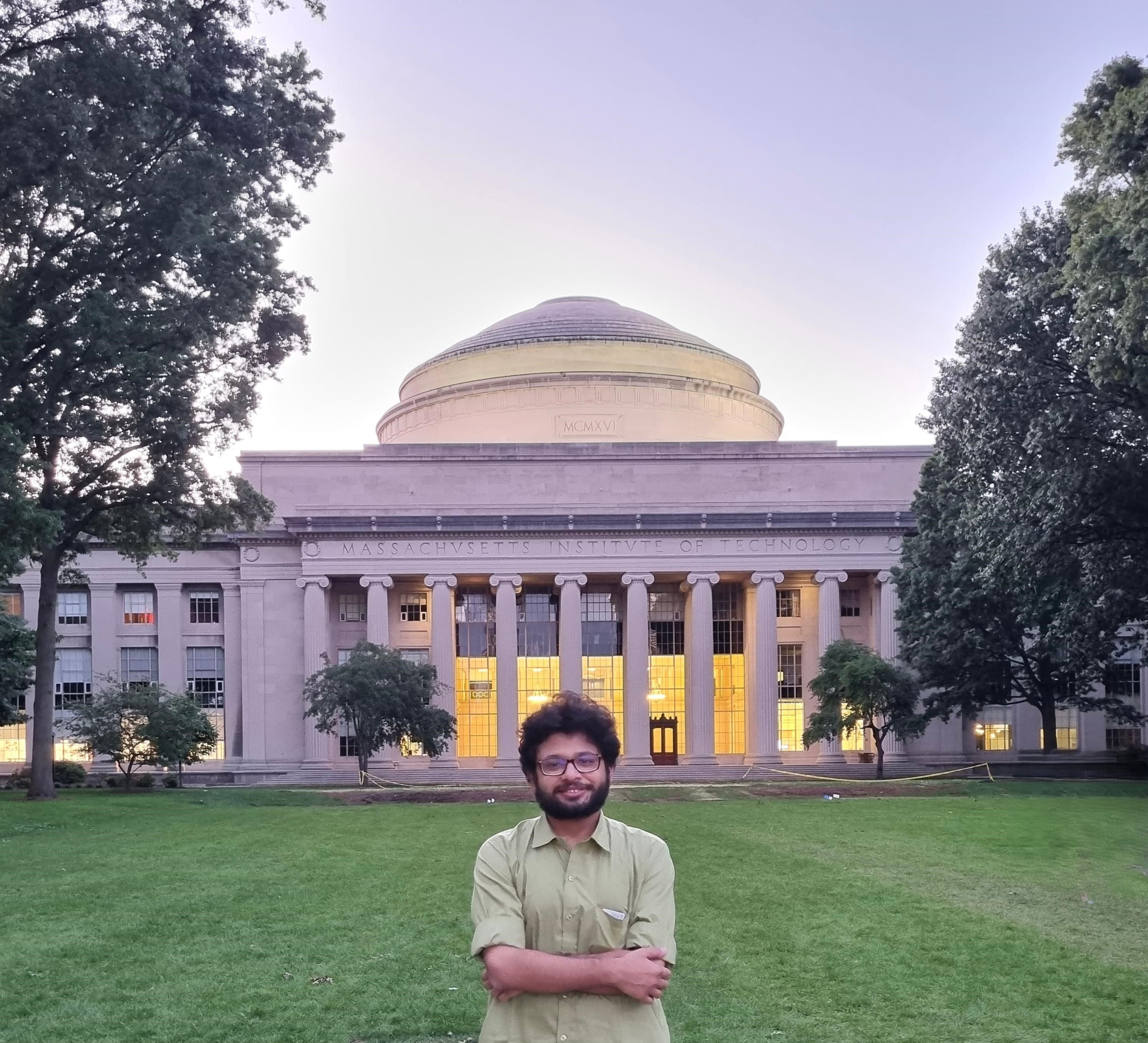
MIT
Grocery shopping can be expensive, but places like Market Basket, Trader Joe’s, and Stop & Shop offer more affordable options. The Haymarket open-air market is great for discounted produce, though the quality can be hit or miss. Healthcare, as a result, is top-notch, with world-renowned hospitals like Massachusetts General Hospital and Dana-Farber Cancer Institute. Many people from across Massachusetts and the US travel to Boston for medical care. Community health centers provide services regardless of one’s ability to pay, though the quality of care can vary. Personally, I didn’t seek much healthcare in Boston as I maintained my primary care myself, but the experiences I had were positive.
Safety is another important aspect of living in Boston. I felt safe throughout my time in the city, even while running at night. Boston’s crime rate is very much lower than the national average.
I visited many places in Boston, half of which were with Anwesha and Jayashimman, who came to Boston for a few days. I was fortunate to host them and show them around. Although we didn’t get to visit it together, my personal favorite was the Whale Watching tour at the seaport the following weekend! I highly recommend not missing this experience. Be sure to bring a good camera and some warm clothing. Serendipitously, I met someone from China studying String Theory at the University of California, Los Angeles, and we had some of the most captivating conversations about Mathematics and Physics. We discussed Bertrand Russell, logic, and the story of Hilbert and Gödel’s Incompleteness Theorem; an unforgettable experience. A short clip of the whale-watching tour is available here.
https://www.instagram.com/p/C8S7QEyt7fD/?utm_source=ig_web_copy_link&igsh=MzRlODBiNWFlZA==
I believe three essentials stand paramount: a safe and welcoming place to live, a nurturing environment for career growth, and access to cleanliness and good food that suits one’s preferences. Boston uniquely embodies all these elements, making it rare in the United States. While other places might fall short in safety, career opportunities, lack of transportation, climate, or cleanliness, Boston blends these qualities, offering a balanced and fulfilling lifestyle.
Now, let me conclude with a bit of appreciation for some of the remarkable people I have met here and with whom I have spent a significant amount of time. I will, however, intersperse these sections with details about my trips and shopping experiences, so please bear with me.
Dr. Bikul Das
The first time I heard Dr. Bikul Das’s name was from my mother when I was 12 years old. Dr. Das was a Principal Investigator in Stem Cell Research at Stanford School of Medicine supported by the Gates Foundation, had made a groundbreaking discovery in 2012. It was unusual for my mother to mention someone from the scientific community, as she had distanced herself from science, though she had always encouraged me to pursue Medical Science. My interests eventually shifted to Mathematics, yet I am glad to have made her proud after several years. Now, I am studying a field that captivates me while also honoring my mother’s passion. Dr. Das’s significant discovery at Stanford made waves, reaching every corner of the stem cell biology research community. Here’s the news. Back in the day, I was an avid participant in quiz competitions, particularly in Science and General Knowledge. I remember winning numerous small prizes and medals, some even awarded by Berry and Derrek O’Brien themselves, though my friends often took home the big trophies. Dr. Das’s achievement often featured in the final rounds of several of these quiz competitions, where I proudly answered questions about it. I also recall his discovery being included as a UPSC prelims question! His discovery also made it into the internet and newspapers but I am not much aware of it. Such was the grandeur of his work, despite its relative obscurity. Although my mother had told me about Dr. Das, I was never curious enough to explore further, as I was mostly engrossed in Mathematics and such news rarely caught my interest. However, one day, out of boredom and with the advent of mobile internet, I decided to look up his name online. To my surprise, I discovered that he was not only from Assam but also from my hometown, Sualkuchi. To my astonishment, soon enough I realized that he is my uncle!

The news
In the days that followed, the internet was abuzz with news about Dr. Das. I delved into reading about his work, his growing popularity, his significant role at Stanford, and his incredible life journey. Inspired by childhood naivety and the hopeful thought that he might one day help me get into Stanford, I wrote him an email in 2012. In my message, I made sure to mention my mother’s name, thinking this connection might prompt a response. Like many in such situations, I expected a reply, given that he was my uncle. However, no reply ever came. I continued on my mathematical path and eventually forgot about it. Years later, I reached out to him again, this time on behalf of a friend interested in stem cells and biology. I hoped that discussing scientific topics, rather than my dreams of getting into Stanford or family connections, would elicit a response. Yet again, there was no reply. Not only did I forget about the email, but I also lost touch with my dear friend. Despite several attempts to reconnect, neither my uncle nor my friend ever responded. Weird situation. Once again, I returned to my mathematical pursuits, choosing to focus on my work rather than people.
However, two days after I reached Boston, I got an email:
Hello Gauranga,
I just found your email. What happened to your friend?
Did he contact us?
HOw are you doing ?
Bikul
I get an email from him after 12 years for the first time. I replied:
Dear sir,
Thank you very much for mailing back. It has been quite some time now and the friend I referred to earlier 5 years ago is doing better, if not good. He is preparing to get himself enrolled in a PhD program and is currently enrolled in the dept. of Molecular Biology and Biotechnology, Tezpur University. His name is XXXXX . He may wish to work in your lab if you consider him.
I am doing great! I am currently enrolled in the M.Sc Data Science degree at Chennai Mathematical Institute (CMI). I have been selected for The Khorana Program for Scholars this year! I am planning to utilize this scholarship to secure my summer internship position with Prof. Yu-Hua Tseng at the Joslin Diabetes Center, Harvard Medical School, for 10–12 weeks during the summer of 2024. I am expected to work in the field of Computational Biology in “muli omics analysis of brown fat thermogenesis”.
With best regards,
Gauranga Kumar Baishya.
He replies:
Wow! Congratulations, Gauranga. When are you coming to Boston for your internship? I would love to meet you, and show you around. My phone: abc-def-ghij
I will write to XXXXX (my friend)
Looking forward to seeing you
Bikul
So, yeah, I wrote to him 15 years ago, dreaming that one day I’d meet him and maybe even collaborate with him at Stanford, California?! In the meantime, amid the monotony of my life, I try every avenue to reach him: my mother’s contacts, village connections, teacher’s connections, writing to him on Facebook messenger, other social media he seems to be using, emailing everyone I could think of. All to no avail. He was just impossible to reach. Fast forward 12 years, and out of the blue, he writes back: “Hey, remember that email you sent a decade ago? Well, here I am, right next door! Wanna meet?”. How funny is that?
I met him for the first time a few days later, along with his daughter, Sonali. That marked the beginning of some of the most interesting, beautiful, and peaceful moments I had here. Before I go on to that. Let me give a very brief description of him.

When I met Dr. Das for the first time!
Dr. Bikul Das has been the founding Director of KaviKrishna Lab since 2010. An oncologist and stem cell researcher, Dr. Das completed his medical training in India before earning a PhD in Oncology from the prestigious Institute of Medical Science at the University of Toronto in 2007. He has pioneered research in stem cell altruism, a new field in biological altruism that challenges Darwin’s evolutionary theory, offering insights into diseases like cancer and tuberculosis. Since 1994, he has practiced medical oncology through his telemedicine center in his birthplace, Sualkuchi, Assam, which is also where his medical research career began.
In 2012, while at Stanford University, Dr. Das identified the altruistic behavior of embryonic stem cells for the first time. He then established the KaviKrishna Laboratory at Guwahati Biotech Park, IIT-Guwahati, aiming to position India as a leader in altruistic stem cell research. In 2013, his lab reported on the role of stem cell altruism in Mycobacterium tuberculosis dormancy, a finding published in the renowned journal Science Translational Medicine. This discovery was subsequently confirmed by laboratories worldwide.
To further his research, Dr. Das moved from Stanford to the Forsyth Institute, a Harvard University-affiliated research center, where he guided four PhD students in studying stem cell altruism. In 2018, he founded the Thoreau Laboratory for Global Health in Boston, continuing his research in collaboration with KaviKrishna Laboratory. In July 2019, both labs reported that cancer stem cells hijack the altruistic mechanisms of stem cells, a study published in Cancer Research.
Currently, Dr. Das and his team are developing organ-on-chip devices to explore the mechanisms of stem cell altruism further, potentially revolutionizing diagnostics and therapies for cancer and infectious diseases like tuberculosis. His work has been funded by the NIH, Bill and Melinda Gates Foundation, Laurel Foundation, and angel investors such as Deter Beer.
Dr. Das has received numerous awards, including the Young Investigator Award from Stanford University, the Harold John Edward Award from the Canadian Cancer Society, the Schweisguth Award from the International Society for Pediatric Oncology, the Scholar in Training Award from the American Association of Cancer Research, the Hind-Rattan Award from the NRI Society, the Grand Challenge Award from the Bill Gates Foundation, the Junior Investigator Award from The Hospital for Sick Children in Toronto, the Antioxidant Squalene Research Grant from Isshogenki International in Hong Kong, and the Excellence in Medicine Award from Assam Down Town University.
He has delivered around 30 invited talks at international seminars, conferences, and universities in about 15 countries. Dr. Das has published 75 papers and abstracts in leading international journals and conference proceedings, authored two books, and contributed to three book chapters. Through his telemedicine service in Sualkuchi, Assam, he has provided free consultations and care to over 500 cancer patients since 1994 and conducted numerous cancer awareness camps in Assam.
He writes to me:
Welcome to Boston! I live in Lincoln a small town west of Cambridge and about 15 minutes drive from the Alewife subway station. Tomorrow 4 to 7 pm we have the weekly philosophical meeting near my home. It would be great if you can join us. I can pick you up at the Alewife station and then also drop you there. Tomorrow morning I am driving to Bowdoin College in Maine to pick up my daughter Sonali.
A philosophical meeting, you say? Well, I’ve always had two great loves in my life: Mathematics and Philosophy. How many surprises are you planning to throw my way?
The first day, I met him, he gave me a lot of information, most of which I didn’t quite remember (remember my memory issue?!) But later on, I tried to get all the pieces together. In brief, he is involved in a lot of other activities apart from Research. One of them is Philosophy. I will get to the others shortly. But before that let me introduce you to the place we were going, the place where we stayed (he moved to Lowell only a few weeks ago). These places are called Lincoln, and Concord. This place is a historic place in the USA for various reasons.


The Walden Pond
First, the connection with the American Independence. The Battles of Lexington and Concord were the first major military campaigns of the American Revolutionary War, resulting in an American victory and an outpouring of militia support for the anti-British cause. These battles were fought on April 19, 1775, in Middlesex County, Province of Massachusetts Bay, within the towns of Lexington, Concord, Lincoln, Menotomy (present-day Arlington), and Cambridge. They marked the outbreak of armed conflict between the Kingdom of Great Britain and Patriot militias from America’s thirteen colonies, setting the stage for the American fight for independence. The confrontation ignited a broader revolutionary movement that ultimately led to the Declaration of Independence on July 4, 1776, and the establishment of the United States as an independent nation. The second reason is connected with Henry David Thoreau. His book, Walden (/ˈwɔːldən/; originally published in 1854 as Walden; or, Life in the Woods) reflects Thoreau’s experiences of simple living in natural surroundings. This work serves as a personal declaration of independence, social experiment, spiritual journey, satire, and, to some extent, a manual for self-reliance. Walden chronicles Thoreau’s time spent living in a cabin he built near Walden Pond, on land owned by his friend and mentor Ralph Waldo Emerson, at Concord. Thoreau spent two years, two months, and two days in this setting. Throughout the book, Thoreau provides detailed scientific observations of nature, along with metaphorical and poetic reflections on natural phenomena. He identifies numerous plants and animals by their common and scientific names, documents the color and clarity of various bodies of water, and meticulously describes the freezing and thawing of the pond. Additionally, he recounts his efforts to measure the depth and contour of the pond’s bottom, which was believed to be bottomless.
“I learned this, at least, by my experiment: that if one advances confidently in the direction of his dreams, and endeavors to live the life which he has imagined, he will meet with a success unexpected in common hours…I find it wholesome to be alone the greater part of the time. To be in company, even with the best, is soon wearisome and dissipating. I love to be alone. I never found the companion that was so companionable as solitude…However mean your life is, meet it and live it; do not shun it and call it hard names. It is not so bad as you are. It looks poorest when you are richest. The fault-finder will find faults even in paradise. Love your life, poor as it is. You may perhaps have some pleasant, thrilling, glorious hours, even in a poorhouse. The setting sun is reflected from the windows of the almshouse as brightly as from the rich man’s abode; the snow melts before its door as early in the spring. I do not see but a quiet mind may live as contentedly there, and have as cheering thoughts, as in a palace…”
― Henry David Thoreau, Walden”

Walden
Henry David Thoreau’s ideology, and views on law and government, center around the concept of civil disobedience and moral justice. Thoreau distrusted institutional government, seeing a fundamental divide between moral justice and existing laws. He believed that unjust laws should be peacefully disobeyed rather than strictly followed. Thoreau viewed the American government as hypocritical, questioning how a nation founded on liberty could enslave people and impose military rule abroad. He criticized majority rule for leading to moral corruption and argued that the best government governed minimally or not at all. Thoreau condemned blind obedience to the law, likening it to being a “cog in a machine,” and stressed the importance of individual action and peaceful law transgression for effecting change. His ideology emphasized following one’s conscience over compliance with unjust laws. Thoreau’s philosophy of civil disobedience later influenced the political thoughts and actions of notable figures such as Leo Tolstoy, Mahatma Gandhi, and Martin Luther King Jr. Henry David Thoreau can also be regarded as the “Gandhi of the United States.”
I participated in the Philosophy meet, and it was a truly wonderful experience. All seven of us, along with a few others, gathered to discuss a topic that has already resulted in the following publication: Relevance of Indus Valley Civilization’s Pacifism in the Emergence of Thoreau and Gandhian Morality! I think the title is self-explanatory.
Numerous philosophical meets followed, and we soon shifted our focus to discussing the implications of AI in education, healthcare, and medicine within the context of democracy. These discussions will soon be documented, as we are currently working on our next publication. We were joined by some of the most highly qualified individuals: Dr. Bikul Das, Dr. Marcie, who works in a biotech firm and is an MIT graduate, Andy, her friend and also an MIT graduate and software developer, Sonali, an undergrad at the University of British Columbia, and Shirsajit, a research scholar at UMass Lowell. We gathered at Kim’s place; Kim is the great-grandson of the 6th President of the United States, John Quincy Adams!! Additionally, I was accompanied by another brilliant high school student and my friend, Simon (Marcie’s daughter). Simon has a major in philosophy.

At the extreme left is Kim, exactly in the middle with the green shirt is Marcie, next to her on her left is Bikul, and to his right is Shirsajit. The woman next to the left of Kim is a nurse: She has vaccinated over 8 million people throughout her lifetime (She is 72)
All these meets resulted in what I would rather say was one of the most beautiful weekends I have had in my life. You don’t get to see this in India. I tried to bring a few of my Indian Khorana friends to these meetings so that the discussion is blessed by their input and I am very glad most of them thoroughly enjoyed it!
Apart from that,
Lincoln is a picturesque village that feels like a scene straight out of a storybook. Imagine beautiful houses with charming, well-kept gardens, nestled amidst rolling hills and lush greenery. The fields and farms stretch out in a patchwork quilt of crops and pastures, giving the town a serene, pastoral vibe. Everywhere you look, there’s a sense of cleanliness and care, with tree-lined streets and colorful flower beds that add to the town’s aesthetic appeal. For nature enthusiasts, Lincoln offers a variety of hiking trails that meander through tranquil forests and along sparkling streams, providing both casual walkers and seasoned hikers with breathtaking views and a chance to connect with nature.


Lincoln
All the people I met, including Bikul, Marcie, Simon, Kim, etc. were some of the most fascinating individuals I’ve had the pleasure of connecting with. They invited me for lunch and dinner, cooked meals for everyone, picked me up from my place or Alewife, and even dropped me off in Roxbury, which is a half-hour drive from Lincoln. They also arranged accommodations for me to stay overnight or even for a couple of days if needed. Would you make such efforts to help me if you were in their position?
My uncle, apart from my guide Henrique and Prof. Tseng has become my favorite person! He is a true gentleman, soft-spoken, humble, and deeply philosophical. He is always busy, whether he is reading or writing a paper, applying for grants, or submitting manuscripts, in philosophy or biology. His position is a testament to his hard work, dedication, and passion. Despite his many responsibilities and having three children scattered across different parts of the world, he still finds time to pick me up and drive me back. He takes me hiking around Lincoln and shows me the beauty of Walden Pond. Even with his busy schedule, he texts me to invite me to see the 4th of July celebrations in Boston and cooks multiple different Indian dishes to make me feel at home. He texts me out of the blue to check if I am doing well and in good health. He encourages me to reach out and share anything I might need to discuss or express. He gifted me around 10 books ranging in topics from Philosophy, Mathematics, and Biology and asked me if I needed any more! How wonderful can one person be? I can only aspire to be as sweet as he is, but I doubt I could ever match his kindness!

Many of the members of the Philosophy Club here are missing, but this is a picture that captures a “discussion”
Besides his passion for philosophy, he is also into swimming and writing books. He has his clinic in Assam where he has been practicing as a diabetologist and oncologist for decades, treating people from my village at the minimal cost they can afford. There are so many other things I could share about him, like how he used Hindu philosophy to make a significant discovery in 2012, and his initiative in collaboration with the Union Minister and former Chief Minister of Assam, Sarbananda Sonowal, to pave the way for a Harvard-India initiative, but I will save those stories for another day! I will miss him dearly although I’ll be working with him either on my Master’s thesis or as a research assistant!
New York City (NYC)
Remember me introducing you to Lincoln and how it is connected with the American Independence? To give a brief introduction, Independence Day, commonly known as the Fourth of July, is a beloved federal holiday in the United States that celebrates the ratification of the Declaration of Independence by the Second Continental Congress on July 4, 1776, marking the birth of the nation. On this historic day, the Founding Fathers declared that the Thirteen Colonies were no longer under British rule, freeing them from the monarchy of King George III, and establishing them as united, independent states. The Congress approved independence by passing the Lee Resolution on July 2 and formally adopted the Declaration of Independence on July 4. Today, Independence Day is synonymous with grand fireworks displays, lively parades, barbecues, carnivals, fairs, picnics, concerts, baseball games, family reunions, and various other public and private events that honor the rich history, government, and traditions of the United States. As the national day of the United States, the Fourth of July brings people together to celebrate the essence of American freedom and unity. This year, I decided to immerse myself in the festivities, and what better place to do so than in New York?

A substantial portion of the first battle of the Revolutionary War, the Battle of Lexington and Concord, was fought in Lincoln.
Day1. I booked a bus to New York, traveled there early in the morning, and planned to stay with my friend Charan, a Khorana Scholar working in cardiovascular biology at Mount Sinai. He kindly offered me a free five-day stay in his Manhattan apartment. I was fortunate to stay in a private room that was vacant because someone had paid for it but hadn’t arrived yet. This stroke of luck saved me over $600, as otherwise, I would have had to pay for the stay. Typically, people stay in New Jersey and commute to NYC to save on accommodation costs, but I was incredibly lucky to have such a convenient arrangement. NYC is (one of the?) the costliest place in the world to stay. My bus dropped me off at Times Square, and oh my god, it

Times Square, July 4
was scorching hot, made worse by my big backpack and the black jacket that I had tied around my waist. I befriended an Indian traveler on the bus who, despite it being his first visit, shared a few things about NYC. I remember him asking me if I was traveling alone, and when I said yes, he responded, “Wow! You need guts to do that.” His words made me feel good. Soon, I discovered that while NYC was not as daunting as I had imagined, just that it was incredibly diverse and bustling with crazy activities. The 4th of July made it crazier (You could see many adult entertainment activities right in the middle of the streets, out in the open!)

From left: Charan, me
Among all the Khorana Scholars I met in the US, Charan was my favorite. I’ll save that part of the story for later, as we had many funny, crazy, and weird experiences, whether in our conversations or dealing with his roommate as we navigated our daily lives for those 5 days in his apartment in NYC. I met two other Khorana Scholars as well, Anwesha and Jayashimman (both very sweet too!), who had come from New Haven to join the 4th of July celebrations, particularly for the fireworks. We quickly figured out the best spots to view the largest fireworks display in the USA — the Macy’s fireworks by the Hudson River. Before everything began, we spent some time strolling around NYC. Jayashimman and Anwesha had arrived a few hours earlier, taking advantage of the time to explore Central Park. By the time I arrived, we decided to meet up at Times Square. Initially, there was some debate about whether we should freshen up a bit (in my case) and charge Jayashimman’s iPhone where I would freshen up. However, considering their brief stay in NYC (come on, you can’t dare to stay long in NYC, it’s too costly!), we thought it best to optimize our trip. We decided to use Anwesha’s (silly) Android phone for taking pictures and save the charge on our (mine and Jayashimman’s) iPhones for Macy’s. Anwesha had a power bank, but it was (useless, sorry XD) since it only charged her phone.

From left to right: Anwesha, Me and Jayashimman
We spent a lot of time walking under the sun, marveling at the towering skyscrapers of NYC. We even tried to enter one, but we were not permitted. Afterward, we decided to head to the famous Chelsea Market. It turned out to be an exciting place, and we spent several hours there just walking around, exploring, and having fun. The market had shops of all kinds — from meat and grocery shops to fresh produce stalls and, of course, the inevitable “tourist” shops. There were also plenty of food shops, restaurants, and bars. As you might have guessed, everything was super expensive. Jayashimman and Anwesha didn’t buy anything, but I dared to purchase a lot of chocolates for Prof. Anupam Saikia, who loves them. Next, we thought of walking to Little Island, but it was closed due to security concerns related to the 4th of May. We ended up gathering around 6 pm in the middle of 1st Avenue and East 42nd Street, which was one of the best viewpoints for the Macy’s fireworks. Despite repeated warnings about the heavy crowd, I didn’t take it seriously. I thought, “Come on, have you seen Durga Puja celebrations in Kolkata and Assam?” This turned unexpectedly frightening at one point, with an estimated 1 million spectators packed into a small neighborhood by the Hudson to witness the spectacular 25-minute fireworks display. We stood still, unable to move. However, it was a breathtaking spectacle, featuring over 60,000 shells in more than 30 vibrant colors and introducing never-before-seen effects. The pyrotechnics soared up to 1,000 feet up in the sky, cascading down to the water’s edge, painting the sky with dazzling patterns mixed with almost every possible color. Among the new designs, a custom-made silver cascading burst stood out, creating a mesmerizing center kaleidoscope with alternating red and blue hues, filling the sky with stunning beauty and leaving spectators in awe. A few minutes later, to avoid the late-night rush to public transport, we left the show five minutes before it ended, which was disappointing. However, we all made it safely home; I went to Charan’s, while the others headed back to New Haven. It was one of the most beautiful days during my time in the US, a stunning 4th of July celebration!

The Macy’s Fireworks
The rest of the days.
The rest of the four days were incredibly fun! Alone in the world’s most popular city, I had everything I needed: time, money (thanks to the free room XD), energy, and a ton of places waiting to be explored. I visited the Museum of Modern Art, where I had the chance to see one of the world’s most famous paintings, The Starry Night by Vincent Van Gogh, and a ton of Picasso’s: truly an unforgettable experience.

Vincent Van Gogh’s The Starry Night


Does it need a caption?
I took a trip to Roosevelt Island via the aerial tramway, enjoying the stunning views of Manhattan on both sides of the East River. The 9/11 Memorial and Museum were deeply moving, showcasing more than 40,000 still images, 300 moving images, 3,500 oral recordings, and over 14,000 objects, including broken glass, debris, letters, textiles, artwork, books, and manuscripts. The memorial covered the historical breadth of the event while also delving into the deeply personal stories of those who lost their lives. I spent nearly half the day there, more time than anywhere else so far, completely absorbed by everything. I visited Times Square, Wall Street, the Empire State Building, the Brooklyn Bridge, and saw the Statue of Liberty from a distance, etc.

From the 9/11 Museum
Amongst the other places I visited, Summit One Vanderbilt was weirdly nice. Located at the top of a brand-new skyscraper towering over Grand Central, it’s the tallest building in Midtown Manhattan and the 4th tallest in NY. While it casts a shadow over one of New York’s most iconic destinations, it also offers one of the best new views of NYC. It spans from the 91st to the 93rd floor, starting with AIR, which introduces you to beautiful spaces like Transcendence 1, Transcendence 2, Reflect, Affinity, and Unity. It’s a bit overwhelming at first as your eyes adjust to the floor-to-ceiling windows, mirrors, and height. But once you get used to it, there’s so much to see, from rare up-close views of the Chrysler Building to the Empire State Building and Central Park to the One World Trade Center. Everyone has their phone out — just go with it, and enjoy seeing the city from this new vantage point. The most enjoyable part might be the outdoor terrace, where you can sip a Sunset Margarita — made with tequila, pear liqueur, and pomegranate juice — and feel like you’re at the city’s best rooftop bar.

NYC from Summit One Vanderbilt
Overall NYC was very fun and hot!
California
Like NYC, you might expect a lengthy description of my visits to Los Angeles, Las Vegas, Stanford, Caltech, and other places. Unfortunately, as you may have figured out there isn’t much to share. I had booked a flight to Los Angeles to meet my good friends — Kaustav (a grad student in astrophysics at Caltech), Hrisikesh (a summer student in CS at UCSD), and Ankur (a working professional in AI and a CMU AI graduate) — and to visit Hollywood and other attractions. However, I bruised my knee while taking the shuttle canceled my trip, and missed the flight anyway. So, let’s jump straight to talking about people!
Dr. Henrique Camara and Prof. Yu-Hua Tseng
Of all the tasks I could do best: pacify and help a worried friend, solve a math problem, offer thoughtful advice, and maintain a positive attitude in challenging situations there are many virtues I am proud of embodying and love to practice. However, the one thing I cherish the most among them all is teaching and mentoring. Having said that, one might wonder: Of all the other possible alternatives, why did teaching become the chosen path? Why not anything else? I believe the reason lies deeply in one’s psychology and way of life. As you may have figured out, I have always been an intensely curious and passionate person. Consequently, I engage with everything I do — reading, listening, eating, and experiencing — wholeheartedly and with dedication. I approach both books and conversations with people with the same passion and attentiveness.
Therefore, I have developed an innate belief that people themselves, with all they say, discuss, and in particular, teach, better be interesting. However, many of the teachers I’ve encountered have unfortunately been either monotonous and apathetic, overly strict and hostile, or discouraging and uninformed. This sentiment is not personal but is shared by many people I have known. Consequently, many have either lost interest in the subject or have persevered by encouraging themselves, disregarding these disheartening circumstances. Having said all this, it is, therefore, an immense pleasure to encounter a teacher who goes beyond merely teaching.
“There are two kinds of teachers: the kind that fill you with so much quail shot that you can’t move, and the kind that just gives you a little prod behind and you jump to the skies.”
― Robert Frost
Of course, teaching is different from mentoring — perhaps a part of it — but Henrique was a remarkable mentor. Trust me when I say, you need substantial knowledge of biology to, for example, present a bioinformatics paper in a journal club or conduct extensive research. I had very little knowledge of it all. Yet, he provided me with ample time and freedom. He answered all my questions, whether small or significant. His responses typically included a brief oral overview and some materials he would email for me to review for more information. In his explanations, there was not only a comprehensive overview but also motivation and appreciation for my curiosity! He has been a true friend, always encouraging me for my hard work, even when it didn’t yield the desired results. He urged me to take breaks, to stop working sometimes and explore — whether it was roaming around Boston, traveling to New York, or a trip to California. “That too is a part of the experience!” [Maybe I took that seriously, haha]. He also covered my rent and paid for my bulk Amazon orders when I was having an issue with payment for about a week. He is one of the most soft-spoken people I have seen!

From left to right: me, Henrique, and Prof. Tseng
I didn’t meet Prof. Tseng very often, maybe once a week, either in meetings or through Henrique. She was just as same as Henrique! I won’t repeat the same things, but she appreciated my hard work, was very encouraging, and provided me with this big platform to learn and grow. I shared all of this with my uncle, and he came all the way from Lowell on a weekday, postponing his many meetings just to be there. Despite important grant submission deadlines (I heard she canceled many other meetings that week to accommodate time for this!), I am very glad Prof. Tseng made time to meet him. It was a wonderful meeting; I mostly stayed silent, savoring the rare opportunity to listen to my two esteemed mentors discuss life and science. However, unfortunately, Henrique couldn’t make it that day as he was out of town for a conference and to renew his visa, but I wished he had been there.

From left to right: Dr. Das, Prof. Tseng, and me (I wish I had trimmed my hair, urgh!)
I will always cherish the moments I have spent with them both!
Dr. Rubul Mout
On the last week in Boston, I also got the chance to meet Dr. Rubul Mout. He is a scientist (Research Fellow) at Harvard and BCH, working in the fields of Hematopoietic stem & T-cell engineering, protein design, and gene editing. It was an amazing meeting where we discussed life in the USA, politics, science, biology, and various other topics.
He is very popular in Assam’s literary community and is the author of two books in Assamese. One of his books, in particular, “মোৰো এটা সপোন আছে” (Moro Eta Sapon Ase, meaning “I Too Have a Dream”), is one of my favorites. This best-selling memoir, published in 2017, has sold over 40,000 copies since its release, making it one of the highest-selling books in the Assamese language.
“I Too Have a Dream” is divided into four main parts, each further divided into small and large sub-chapters, totaling seventy-one sub-chapters. The first section, entitled “Childhood,” details the various conflicts the author faced during his early years, starting with a description of his reading table and covering his journey from primary school to matriculation. The second section, “Sangram,” spans the period from his higher secondary education to joining the Tata Institute of Fundamental Research as a scientist. In the third section, the author recounts his experiences as a scientist at the Tata Institute and how these experiences led to an opportunity to pursue a doctorate. The fourth section, “My Father’s Illness,” describes Dr. Mout’s anxieties upon learning of his father’s terminal illness, Parkinson’s disease, while conducting research at the University of Massachusetts in the United States. In this chapter, the author also explores the various possibilities of gene editing and the CRISPR/CAS9 technology.
This book is truly amazing. It is emotional, inspirational, and motivational, showing us how privileged we are. It demonstrates how hard work and belief can overcome any suffering in life. The book discusses the harsh and tough realities of life and how circumstances can force us to do things we shouldn’t. It is a must-read for anyone who feels their life is difficult or who needs some inspiration. Go and grab a copy of this masterpiece!

With Dr. Rubul Mout
However, on a completely different topic, here is a fun fact about his son, Advik: He is a child prodigy! At just 7 years old and in the 1st grade, he’s already learning calculus and quantum physics on his own! I was astonished to see him solving the Schrödinger Wave Equation. I promised to teach him advanced calculus from scratch this coming August-September.

I had the fortune of teaching Advik Calculus and gave him a roadmap to higher mathematics :-)
A few Miscellaneous acknowledgments and other information I have missed
- I thank Aditi Arun for all the trips she accompanied me on, an amazing woman!
- I thank Shirsajit, Dr. Bikul Das’s PhD student who is working in his lab at UMass Lowell for making me feel at home in the US by cooking those delicious Indian dishes!
- I thank Marcie for driving me at the most unexpected times, whether it was helping me catch the train or dropping me off at Roxbury.
- With all these, I managed to save around $3000, equivalently around INR 250000. Bought the whole Apple ecosystem in the last week, and won an iPhone 15 pro in the lottery with a replacement of my previous iPhone 13.
- Bought tons of gifts for my teachers.
- Gifted my father a $600 (INR 52,000) luxury watch, something he loves dearly.
- Handed my mom cash of $600 (INR 52,000), coz I did not know what she loved. She cried.
- Unfortunately, I couldn’t accommodate anything more in my bags for my friends. So, next time.
- Dr. Das found my email serendipitously while one day he was looking for something completely unrelated to the mail. (Can you believe it?!)
- I will keep adding more if I happen to discover more.
The last rites
While I was packing my bags and belongings, I was concerned about whether everything would fit within the 23+23 kg weight limit. Amidst these worries, I was also saying individual goodbyes and expressing my gratitude to everyone who made my time memorable. The previous week, I traveled to Lincoln to say farewell to Simon, Marcie, and Kim. I had already said goodbye to Dr. Das, who had embarked on a crazy road trip to Vancouver, 3200 miles away, with his son and pet dog to surprise his wife for her birthday (That’s like driving a car from India to Egypt and still having some distance left to cover!). I received many gifts, including a card with heartfelt messages and well-wishes from everyone. Henrique gifted me a large water bottle with “Boston” written on it as a memento of my stay. Prof. Tseng gave me a Farewell card on behalf of the Tseng Lab. The lab organized a farewell pizza day for me, which made my last day emotionally challenging. I also arranged a special one-on-one meeting with Prof. Tseng to personally thank her for giving me this opportunity, and she wished me luck in my future endeavors.
As I move forward, I am filled with gratitude for all those who have been part of my journey. Thank you so much for taking an hour (that’s what Medium says) out of your precious time to read this article. If you find any mistakes or have any suggestions, please feel free to correct them or share your thoughts. Your feedback is invaluable to me. And, if you found this article helpful and enjoyed it, please consider liking it! This article represents a chapter from a unique and unconventional book I have been writing for a few years. The subsequent chapter may delve into the philosophical discourse on the influence of democracy in shaping educational paradigms, particularly in the context of artificial intelligence. This chapter will emphasize a comparative analysis of the educational systems in India and the West, highlighting the consequential disparities that have emerged. If you would like to connect with me, please feel free to reach out via email or the following social media handles:
Facebook, and

The Tseng Lab (2024)
Additionally, I dedicate a significant amount of time to teaching Math and mentoring my juniors, often engaging with them on a personal level, as well as writing, reading, and other pursuits. I am running an initiative called INNOVATEHer to empower women in science and I would like to invite people as well.


My Favorite Moments at a Math Fest (2023)
I often wish I had someone to guide/ work with me in the right direction when I was very young. Therefore, I encourage you to reach out to me if you wish to make friendships, connect, or, most importantly, collaborate on meaningful and impactful projects. I would love to and am always open to such opportunities!
“What is success? To laugh often and much; to win the respect of intelligent people and the affection of children; to earn the appreciation of honest critics and endure the betrayal of false friends; to appreciate the beauty; to find the best in others; to leave the world a bit better, whether by a healthy child, a garden patch or a redeemed social condition; to know even one life has breathed easier because you have lived. This is to have succeeded!”
― Ralph Waldo Emerson